
Generative AI in Document Management: From Basic OCR to Intelligent Tagging

Table of Contents
OCR used to be a big win. You'd scan a document, the system would read the text, and honestly that felt like magic compared to doing everything by hand. But the catch was it only worked when conditions were basically perfect. Wrong font? Extraction fails. Page slightly tilted? Fails. Someone scribbled a note in the margin? Definitely fails.
That was the starting point. And the endpoint today looks completely different. Now systems don't just read text. They figure out what a document is, what's in it, and what needs to happen next. Tagging, classification, extraction, all of it running without someone manually sorting through files. Generative AI is what made that possible, and the jump from where things were five years ago to where they are now is bigger than most people realize.
What follows is a look at how this actually works in practice, where it genuinely helps, and where things go wrong when organizations don't think it through.
What Is Generative AI and How Does It Apply to Document Management?
Both terms are worth defining before going further, because people throw them around pretty loosely. Large language models power Generative AI. They can generate text and summaries. Traditional AI is typically limited to classification tasks.
It generates outputs: text, code, summaries, answers. That's actually a big deal for document work, because documents are fundamentally about content, not just data points sitting in a database.
Document Management is the set of systems and processes organizations use to capture, store, organize, and govern documents throughout their lifecycle. Not glamorous. But it underpins a lot of how businesses actually function day to day.
Put the two together and you get something more capable than either one on its own. Generative AI doesn't replace electronic document management systems. It adds a layer of understanding on top of them. Think of it this way: the filing cabinet's still there. It just now has something reading everything inside it and actually making sense of what it finds.
Top Use Cases for Generative AI in Document Management
Organizations are already using Generative AI to improve several key areas of document handling.
Content Generation and Summarization
Most people skim lengthy contracts instead of reading every page. It helps users understand long documents much faster. Key dates, obligations, penalties, renewal terms. Users can quickly identify what matters most without searching through every section.
Advanced Data Extraction
Traditional OCR needed clean, structured input. Real documents don't cooperate like that. Invoices show up in dozens of formats, forms get filled in by hand, and layouts shift whenever vendors decide to redesign their templates. AI-powered extraction handles that variability without needing a fresh configuration every single time it encounters a new document type.
Document Classification and Intelligent Tagging
This is the part that matters most for anyone managing records management at scale. Documents come in, the system reads them, figures out what they are, and applies the right metadata automatically. Sounds simple. But in practice it eliminates a whole category of manual work that used to require dedicated staff just to keep up.
Workflow Automation
Once a document's classified, the system can route it. A contract above a certain value goes legal. A verification check may be required when an invoice comes from a new supplier. In high-stakes industries, getting documents to the right people quickly isn't optional. Documents reach the right people faster, with fewer opportunities for mistakes.
Intelligent Document Processing (IDP) and the Role of LLMs
Intelligent Document Processing combines OCR, natural language processing, and machine learning to extract and classify data from unstructured documents. For a long time, it was the most capable document automation technology most organizations could get their hands on.
But it had a serious problem. Rigidity. Early IDP systems were built around templates, which sounds fine until you realize what that actually means in practice. You'd train the system on a specific invoice layout and it worked great, right up until that layout changed. New vendor, shifted column, different field order, and suddenly the extraction broke. Someone had to go in and fix it manually. In organizations processing thousands of documents every week, that kind of fragility adds up fast.
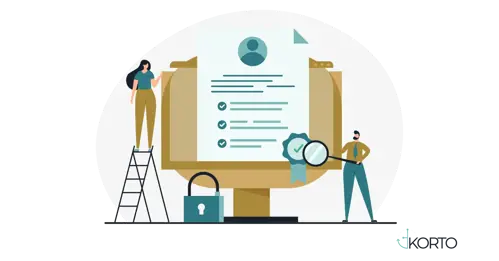
LLMs changed the underlying logic entirely. Instead of matching fields by position, these systems now read documents contextually. Information is identified through context and language patterns, not document structure alone. Document formatting may change, but the system can still locate the relevant information.
The practical result is that IDP systems are just a lot less brittle now. They handle document types they weren't explicitly trained on, they adapt to format changes without someone having to reconfigure everything, and when they hit something genuinely ambiguous, they flag it for human review. They don't quietly produce a wrong answer. That last part matters more than people give it credit for.
Risks of Using Generative AI for Document Management
There are real risks here, and they're worth taking seriously rather than treating as fine print.
Hallucination
Hallucination is when an AI produces information that doesn't exist in the source material but sounds completely plausible. LLMs generate text by predicting what comes next based on patterns. They don't verify anything. So a contract summary might include a clause that was never actually in the original document, written with the exact same confident tone as everything else. No warning. No error message. It just looks like real output.
Data Leakage
Data Leakage is the unauthorized exposure of sensitive information through AI model inputs, outputs, or training data. When employees paste confidential documents into public AI tools to get a quick answer, that data leaves the organization's infrastructure entirely. Whether it gets stored, logged, or used for model training depends on the tool's policies, and honestly, most people using free AI products at work haven't read those policies. Not even close.
Prompt Injection
Prompt Injection is a security vulnerability where malicious instructions are embedded in inputs to manipulate how an AI system behaves. Someone can hide text inside a document that tells the AI to ignore its instructions, bypass controls, or surface data it shouldn't touch. Security researchers have demonstrated this over and over again. It's not theoretical.
Compliance Violations
All three risks above share a common downstream consequence. If sensitive information is processed incorrectly, the liability rests with the organization.
Data Privacy and Compliance Considerations
GDPR, HIPAA, and sector-specific regulations don't leave much room for interpretation. They set hard rules on how personal and sensitive data gets processed, stored, and shared. And once AI is handling documents, those rules apply to the AI workflow just as much as anything else.
The specific challenge with Generative AI is that it can move data across boundaries that compliance frameworks were designed to protect. An employee uploading a patient record to an AI tool for summarization has just sent that data to a third-party system.
Whether that's a HIPAA violation depends on where the data is stored, what the vendor does with it, and what agreements are in place. Most employees making that call at the moment don't know the answers. They're just trying to get something done faster.

Building compliance into AI workflows from the start produces better systems than trying to retrofit it later. That's harder than it sounds. Part of it means having a clear data retention policy. Knowing how long different document types need to be kept, and when they need to be deleted, limits both compliance exposure and the volume of sensitive data that AI systems can access in the first place.
Healthcare organizations face a harder version of this problem. The combination of AI and HIPAA and GDPR compliance in clinical settings requires tools that support data residency requirements, access logging, and audit trails. Most general-purpose AI products weren't built with any of that in mind.
How to Mitigate Generative AI Risks in Document Workflows
These risks don't make AI unsuitable for document work. They make deploying it carelessly expensive.
Governance is the starting point. Not a lengthy policy document. Just clear answers to a few questions: which tools has the organization vetted, what data is off-limits for AI processing, and who's responsible when something goes wrong. Without that clarity, individual teams decide for themselves.
One department uses a properly contracted enterprise tool. Another grabs whatever free product loads fastest. Both think they're being reasonable, because honestly, nobody told them otherwise.
Human review is what catches errors before they compound. The issue with AI mistakes isn't just that they happen. It's that they look clean. A wrong figure pulled from medical records doesn't flag itself as uncertain. A fabricated clause in a contract summary reads with the same confidence as a real one.
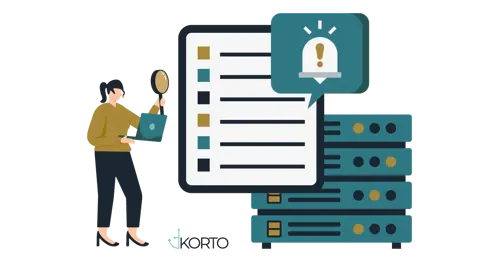
Checking AI outputs before they're saved or acted on takes a few minutes. Fixing what happens when that step gets skipped takes considerably longer. And it will get skipped, if nobody makes it a requirement.
Access controls are the piece that gets overlooked most often. The question's actually pretty simple: can this AI tool show a user information they wouldn't normally be allowed to see? If yes, that's a problem.
An AI assistant querying a document repository should operate within the same permission boundaries as the document system itself. If it doesn't, it becomes a workaround to security policies that exist for good reasons. Organizations usually don't notice until someone actually uses it that way.
Most organizations already have governance frameworks, review processes, and access controls in some form. Solutions like KORTO can support that process by combining document management, records governance, and access controls within a structured environment.
Instead of treating AI as a separate system, organizations can apply the same rules they already use for managing sensitive information, reducing risk while still benefiting from automation and intelligent document processing.
5-Second Summary
Generative AI is changing document management from simple text recognition to intelligent understanding and automation. Organizations that adopt it thoughtfully can reduce manual work, improve accuracy, and strengthen compliance, while those that ignore governance and security risk costly mistakes.